In Mauritania a history of coups is destroying the nation’s ability to embrace noble governance


In Mauritania a history of coups is destroying the nation’s ability to embrace noble governance
Since the 2008 coup Mauritania has had three presidents namely Mohamed Ould Abdel Aziz, Ba Mamadou Mbare who passed away in 2013, and Mohamed Ould Ghazouani who was elected in August 2019 presidential election, reelected in 2024 and is a retired chief of staff of the armed forces and was actively involved in the 2005 and 2008 coups. Former president Sidi Ould Cheikh Abdallahi born in 1938 was ousted in 2008. According to Human Rights Watch “while the government has criminalized slavery, human rights and anti-slavery groups denounce its persistence, and the plight of the large number of former slaves and their descendants who live in extreme poverty and are marginalized”.
In 2015 I published the piece “Coup d’Establishment” on The Huffington Post which in this manuscript I have referred to in addressing Gabon’s governance problem. A coup d’establishment applies to Mauritania, as I clarify in my 2015 piece, as follows:
A coup d’establishment seeks to substitute a country’s inoperant and fallible head with the best possible one gifted with the best available brain, this substitution is however only a proposal for action.
In 2008 The Guardian confirms “Mauritania’s president deposed in coup”, led by the former chief of the president’s official guard. A previous coup in 2005 had ousted the longest-serving Mauritanian “president” Maaouya Ould Sid’Ahmed Taya who gained power through coup as well this time in 1984. According to The Guardian the 2008 deposed president Sidi Mohamed Ould Cheikh Abdallahi “had angered elements in the military by opening talks with Islamist hardliners accused of having links with al-Qaida-affiliated groups”. In 2008 Carnegie Endowment reiews the domestic complexities and international dilemmas of Mauritania’s coup. According to Carnegie “Abdallahi’s ouster is the culmination of an ongoing political crisis in Mauritania”.
Noble, less authoritarian governance is necessary in Mauritania in 2026, to end once and for all modern slavery; but it also desperately needed in Algeria, Morocco and Libya. Tunisia which left autocracy behind in 2010 is in 2026 entangled in a severe economic crisis and a trap of incompetence in governance turned autocracy, as I have explained earlier in this chapter. The crisis of democracy is rather a crisis of politics with decreasing voter turnout in nations like Tunisia or Albania where the new system democracy and capitalism has not lived up to its expectation, leaving migration as the sole alternative to aspire to a better future. In Mauritania voter turnout in the presidential election was 55.4 percent in 2024 down from 62.6 percent in 2019.
A few months before in May 2008 president Abdallahi had replaced his government with several officials who had served in the administration of former president Taya. According to Carnegie “the Taya regime had frequently used the danger of violent islamism to justify repressive measures and banned islamist parties”. Taya born in 1941 was accused in 2007 of torture by Mauritanians living in New York City, maybe George W. Bush should be accused of illegal imprisonment and torture by the Mauritanian. Carnegie argues that Mauritania has lacked a strong national identity, in which inequality, poverty and corruption contribute to extremism. In 1999 Mauritania established diplomatic relations with Israel, the third Arab country to do so besides Egypt and Jordan. In 2008 prior to the coup “gunmen attack Israel embassy in Mauritania”, subsequent to which Israel closes the embassy honoring Mauritania’s request.
In this chapter I propose tha Algeria and Egypt lead the creation of the North African Treaty Organization, which will subsequently sign a non-overlapping treaty of friendly cooperation with an upgraded NATO. Mauritania must in this context demilitarize and outsource its military to the new emerging organization that will have a clear mandate of non interference. According to the Central Intelligence Agency Mauritania spends 2.5 percent of GDP in military expenditure in 2024 behind Algeria’s 8 percent and Morocco’s 4 percent, with a per-capita income that is roughly 71 percent of Morocco’s and 41 percent of Algeria’s in 2024. Algeria’s takeover will guarantee Mauritania’s soldiers double their salaries overnight. Mauritania’s military expense must be channeled immediately to healthcare and education, education completion rates must increase to 100 percent, maternal mortality must drop to Morocco’s level. A new system of vocational education is an absolute must have, inspired in the one presented in Chapter 38 WestAfrica section Liberia & Sierra Leone.
According to Global Firepower, in 2023 Mauritania’s military employs 16,000 (31,500 in 2026) and Mali’s military 18,000 (40,000 in 2026), a total of 34,000 that Algeria’s military counting 130,000 active military personnel (130,000 in 2026) can easily absorb. Furthermore the cost of payroll for 34,000 assuming a mean monthly salary of $250 in Mauritania and $125 in Mali is $6.25 million per month or $75 million per year, and $150 million per year if salaries are doubled, an insignificant amount provided the impact in improvement of governance an stability Algeria’s takeover of Mauritanian and Malian militaries will imply.
According to Global Firepower the combined military budgets of Mali and Mauritania per annum is $105 million in 2021 and$1.37 billion in 2026 seems certainly excessive, less than ten percent of Algeria’s $13.9 billion in 2021, $25 billion in 2026. In 2019 prior to the general election, Chatham House publishes the report “
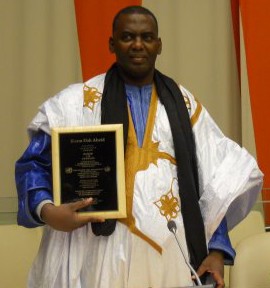
” authored by journalist Paul Melly (paulmelly@fastmail.net). In June 2019 the ruling party’s candidate Mohamed Ould Ghazouani is declared winner with 52 percent of voters’ support and a voter turnout of 62.7 percent, with anti-slavery campaigner Biram Dah Abeid coming second. The opposition rejected the results. Was the election fair and transparent? In 2019 Carnegie Endowment’s analyst Dr Frederick Wehrey publishes the piece “control and contain: Mauritania’s clerics and the strategy against violent extremism”. Afrobarometer does not review Mauritania in 2026.
Voter turnout in the 2024 presidential election was 54.3 percent, president Mohamed Ould Ghazouani renewing his mandate for five more years.
October 2026. I introduce the High School Presidential Team in Chapter 32 Reypublica consisting of some of my finest classmates who in addition are high school teachers.
jpmonfort